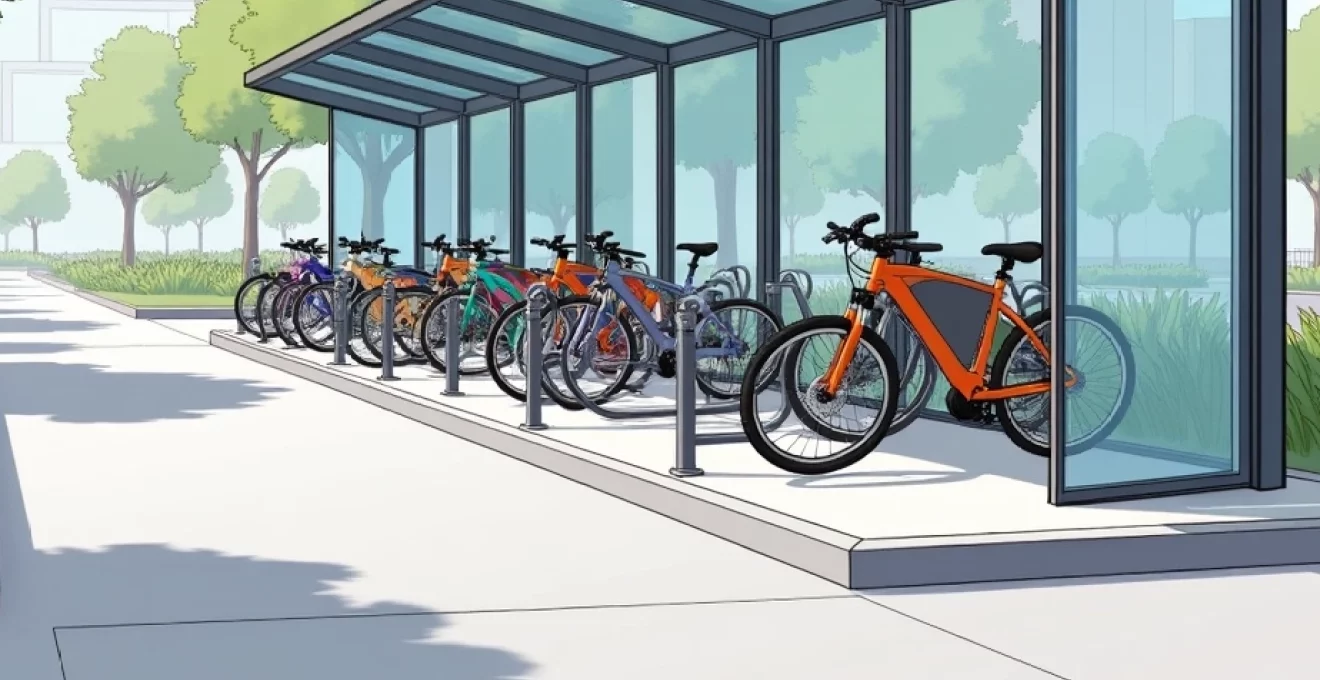
Urban transportation paradigms are shifting dramatically as cities worldwide grapple with climate change, air quality concerns, and the need for more sustainable mobility solutions. Bicycle shelters have emerged as critical infrastructure components that bridge the gap between cycling enthusiasm and practical implementation barriers. These structures represent far more than simple weather protection; they serve as catalysts for comprehensive transportation transformation, encouraging modal shifts that reduce carbon emissions while promoting healthier communities. The strategic installation of covered bicycle parking facilities has proven instrumental in creating bike-friendly urban environments that support long-term sustainability goals.
Municipal planning integration strategies for bicycle shelter infrastructure
Effective bicycle shelter deployment requires sophisticated municipal planning approaches that align with broader urban development objectives. Cities must integrate covered bike parking solutions into comprehensive transportation networks, ensuring seamless connectivity between residential areas, commercial districts, and transit hubs. This integration process demands careful consideration of land use patterns, demographic trends, and projected cycling growth rates to optimize shelter placement and maximize utilization.
Strategic planning initiatives should incorporate bicycle infrastructure as foundational elements rather than afterthoughts in development projects. Municipal planners increasingly recognize that well-positioned bicycle shelters can significantly influence commuting patterns and support broader sustainability targets. The most successful implementations involve cross-departmental collaboration between transportation, parks and recreation, and economic development agencies to create cohesive cycling networks.
Zoning compliance requirements for covered bike parking facilities
Zoning regulations play a pivotal role in determining where and how bicycle shelters can be installed within urban environments. Many jurisdictions have updated their zoning codes to include specific provisions for bicycle parking infrastructure, often requiring minimum shelter ratios for new commercial and residential developments. These requirements typically specify design standards, setback distances, and accessibility features that must be incorporated into shelter installations.
Modern zoning approaches often incentivize developers to exceed minimum bicycle parking requirements through density bonuses or reduced automobile parking obligations. Flexible zoning provisions allow for innovative shelter designs that complement architectural aesthetics while meeting functional requirements. Understanding local zoning constraints and opportunities is essential for successful bicycle shelter implementation projects.
Transit-oriented development integration with sheltered bicycle storage
Transit-oriented development (TOD) principles emphasize creating compact, walkable communities centered around high-quality public transportation systems. Bicycle shelters serve as crucial connectors within TOD frameworks, enabling seamless multimodal transportation experiences. Strategically placed shelters near bus rapid transit stations, light rail stops, and subway entrances facilitate first-mile and last-mile connectivity solutions.
Successful TOD bicycle shelter integration requires coordination between transit agencies, municipal governments, and private developers. The most effective implementations feature secure, weatherproof shelters positioned within comfortable walking distances of transit platforms while maintaining clear sightlines and accessibility compliance. These installations often include additional amenities such as repair stations and real-time transit information displays.
ADA accessibility standards for Multi-Modal transportation hubs
Americans with Disabilities Act (ADA) compliance represents a fundamental requirement for all bicycle shelter installations in public spaces. Accessibility standards mandate specific design features including appropriate approach slopes, maneuvering clearances, and accessible routes connecting to adjacent transportation facilities. These requirements ensure that adaptive cycling equipment and mobility devices can be safely stored alongside traditional bicycles.
Universal design principles extend beyond minimum ADA compliance to create inclusive environments that benefit all users. Thoughtfully designed bicycle shelters incorporate features such as varied rack heights, wide access aisles, and tactile guidance systems that enhance usability for individuals with diverse mobility needs. Consultation with disability advocacy groups during the design phase often yields valuable insights for creating truly accessible facilities.
LEED certification pathways for sustainable bike shelter projects
Leadership in Energy and Environmental Design (LEED) certification provides structured frameworks for evaluating the sustainability performance of bicycle shelter projects. LEED criteria reward bicycle infrastructure installations through multiple credit categories including sustainable sites, materials and resources, and innovation in design. Projects can earn points for providing covered bicycle storage that encourages alternative transportation usage.
Sustainable bicycle shelter designs often incorporate recycled materials, renewable energy systems, and low-impact construction methods that align with LEED objectives. Green building practices in shelter construction can contribute to overall project sustainability ratings while demonstrating organizational commitment to environmental stewardship. Documentation of bicycle usage increases and associated carbon emission reductions strengthens LEED credit applications.
Advanced bicycle shelter design specifications and material selection
Contemporary bicycle shelter design has evolved significantly beyond basic canopy structures to incorporate sophisticated materials science, security technologies, and user experience considerations. Modern installations must balance durability, aesthetics, functionality, and cost-effectiveness while withstanding diverse environmental conditions and usage patterns. The selection of appropriate materials and design features directly impacts shelter longevity, maintenance requirements, and user satisfaction levels.
Advanced shelter designs increasingly incorporate modular components that enable flexible configurations and future expansion capabilities. These systems allow municipalities and organizations to adapt their bicycle parking infrastructure as demand patterns evolve and cycling demographics shift. High-performance bicycle shelters represent significant long-term investments that require careful consideration of design specifications and material properties to ensure optimal return on investment. Https://www.procity.eu/uk/ offers comprehensive solutions for municipalities seeking to implement robust bicycle shelter infrastructure that meets contemporary performance standards.
Weatherproof polycarbonate roofing systems with UV protection
Polycarbonate roofing materials have become the gold standard for bicycle shelter applications due to their exceptional combination of strength, clarity, and weather resistance properties. These advanced polymer systems provide superior protection against precipitation while maintaining transparency that enhances security visibility and natural lighting conditions. Modern polycarbonate formulations include UV inhibitors that prevent degradation and discoloration over extended exposure periods.
Multi-wall polycarbonate designs offer enhanced insulation properties that reduce condensation formation and provide better thermal performance compared to single-layer alternatives. Professional-grade polycarbonate systems typically feature impact ratings that exceed safety glazing requirements, ensuring user protection in severe weather conditions. Proper installation techniques and edge sealing systems are critical for maximizing polycarbonate roof performance and preventing water infiltration.
Galvanized steel frame construction with Anti-Corrosion coatings
Structural frame systems form the foundation of durable bicycle shelter installations, requiring materials that can withstand decades of exposure to environmental stressors. Hot-dip galvanizing processes provide superior corrosion protection compared to alternative coating methods, creating metallurgical bonds that self-repair minor surface damage. Advanced galvanizing techniques ensure comprehensive coverage of complex frame geometries and connection details.
Supplementary powder coating applications over galvanized substrates create multi-layer protection systems that extend frame life while providing aesthetic customization options. Premium anti-corrosion treatments enable bicycle shelters to maintain structural integrity and appearance standards throughout extended service lives, reducing lifecycle maintenance costs. Frame design considerations must account for local climate conditions, soil chemistry, and anticipated loading scenarios to optimize material selection.
Security integration: RFID access control and surveillance camera mounting
Modern bicycle shelter installations increasingly incorporate sophisticated security technologies that protect valuable cycling equipment while maintaining user convenience. Radio-frequency identification (RFID) access control systems enable authorized user entry while creating audit trails that deter theft and vandalism. These systems can integrate with existing campus or municipal ID card programs to streamline user enrollment and management processes.
Surveillance camera mounting provisions should be integrated into shelter designs during initial planning phases to ensure optimal positioning and infrastructure support. Intelligent security systems can include motion-activated lighting, emergency communication features, and real-time monitoring capabilities that enhance user safety and equipment protection. Proper cable management and weatherproof enclosures are essential for maintaining security system reliability in outdoor environments.
Modular assembly systems for scalable installation projects
Modular bicycle shelter designs enable efficient installation processes while providing flexibility for future expansion and reconfiguration. Standardized connection interfaces and component sizing facilitate rapid assembly using common tools and equipment. Pre-engineered modules reduce field fabrication requirements and ensure consistent quality across multiple installation sites.
Scalable systems allow organizations to implement bicycle shelter networks incrementally as demand grows and funding becomes available. Modular construction approaches typically result in lower initial installation costs and reduced construction timeline impacts on site operations. Component standardization also simplifies maintenance procedures and replacement part procurement throughout the shelter lifecycle.
Solar panel integration for LED lighting and device charging stations
Renewable energy integration transforms bicycle shelters from passive infrastructure into active contributors to sustainable transportation ecosystems. Solar photovoltaic systems can power LED lighting arrays that enhance security and usability during evening hours while operating independently of grid electrical connections. Battery storage systems ensure consistent lighting performance regardless of weather conditions.
Device charging stations powered by solar energy provide valuable amenities for electric bicycle users and smartphone-dependent commuters. Self-sufficient shelter systems reduce operational costs while demonstrating organizational commitment to renewable energy adoption. Proper electrical design and weatherproof installation practices are critical for ensuring safe and reliable solar integration performance.
Quantified environmental impact analysis of covered bicycle parking
The environmental benefits of bicycle shelter installations extend far beyond simple weather protection, creating measurable impacts on carbon emissions, air quality, and resource consumption patterns. Comprehensive environmental impact assessments provide essential data for justifying infrastructure investments and tracking progress toward sustainability goals. These analyses must account for both direct effects of increased cycling adoption and indirect benefits related to reduced automobile dependency.
Quantitative environmental assessments enable organizations to communicate the tangible value of bicycle infrastructure investments to stakeholders and funding sources. Data-driven impact analysis supports grant applications, environmental reporting requirements, and corporate sustainability initiatives while providing benchmarks for measuring program effectiveness over time.
Carbon footprint reduction calculations per shelter unit installation
Individual bicycle shelter installations can generate significant carbon footprint reductions through modal shift effects that encourage cycling adoption over automobile usage. Typical calculations assume that each secure bicycle parking space displaces approximately 2,000-3,000 vehicle miles annually among regular commuters. These estimates translate to carbon dioxide emission reductions ranging from 1.5 to 2.5 tons per parking space per year.
Lifecycle carbon assessments must account for embodied emissions associated with shelter manufacturing, transportation, and installation processes. Net carbon benefits typically emerge within 6-12 months of installation as cycling usage patterns establish and automobile trip reductions accumulate. Long-term carbon reduction potential increases substantially when shelter installations catalyze broader cycling infrastructure development and cultural shifts toward sustainable transportation.
Air quality improvement metrics in urban transportation networks
Bicycle infrastructure investments contribute to measurable air quality improvements through reduced vehicular emissions in urban environments. Quantifying these benefits requires sophisticated modeling approaches that account for local meteorological conditions, traffic patterns, and pollutant dispersion characteristics. Key metrics include reductions in nitrogen oxides, particulate matter, and volatile organic compounds.
Air quality monitoring programs can provide before-and-after data that document the cumulative effects of bicycle infrastructure networks on local environmental conditions. Comprehensive air quality analysis should consider both immediate effects near shelter installations and broader impacts throughout transportation corridors as cycling adoption increases. These measurements support public health arguments for continued bicycle infrastructure investment.
Lifecycle assessment methodologies for sustainable infrastructure projects
Lifecycle assessment (LCA) methodologies provide standardized frameworks for evaluating the total environmental impact of bicycle shelter installations from raw material extraction through end-of-life disposal. Comprehensive LCA studies examine energy consumption, greenhouse gas emissions, water usage, and waste generation throughout all project phases. These assessments enable informed decision-making regarding material selection and design optimization.
LCA results help identify opportunities for environmental impact reduction through improved manufacturing processes, transportation efficiency, and material recycling programs. Rigorous lifecycle analysis supports evidence-based sustainability claims and enables continuous improvement in bicycle infrastructure development practices. Standardized LCA protocols facilitate comparison between alternative shelter designs and materials.
Green building rating system contributions and point calculations
Bicycle shelter installations contribute to multiple green building rating systems including LEED, BREEAM, and Living Building Challenge requirements. These contributions span categories such as sustainable transportation, materials and resources, and innovation credits. Point calculations vary depending on shelter capacity, user accessibility, and integration with broader transportation networks.
Maximum point achievement requires documentation of actual cycling usage increases and corresponding automobile trip reductions. Strategic rating system approaches can leverage bicycle infrastructure investments to achieve certification thresholds while supporting organizational sustainability objectives. Proper documentation and monitoring protocols are essential for validating green building credit claims throughout project lifecycles.
Installation implementation protocol and site preparation requirements
Successful bicycle shelter installation requires comprehensive planning protocols that address site selection, preparation, permitting, and construction sequencing. Implementation timelines typically range from 3-6 months depending on project complexity, permitting requirements, and site conditions. Professional installation teams must coordinate with multiple stakeholders including utilities, permitting agencies, and site operators to ensure seamless project delivery without disrupting ongoing activities.
Site preparation requirements vary significantly based on local soil conditions, drainage characteristics, and existing infrastructure presence. Geotechnical evaluations help determine appropriate foundation designs and identify potential complications before construction begins. Thorough site assessment processes prevent costly delays and ensure optimal shelter placement for maximum user convenience and safety. Utility location services are mandatory before any excavation activities to prevent damage to underground infrastructure systems.
Installation protocols must incorporate quality control checkpoints that verify compliance with design specifications, safety standards, and accessibility requirements. Professional installation teams typically complete foundation work, frame assembly, and roofing installation as integrated processes that minimize weather exposure and ensure structural integrity. Final inspections should include functionality testing of security systems, drainage performance verification, and accessibility compliance confirmation.
Professional installation practices ensure that bicycle shelter investments deliver expected performance and longevity while meeting all applicable safety and accessibility standards.